
Check the circuit first
We test the switch, GFCI, transformer, and power at the junction box, and confirm the voltage, so the new light is matched to the wiring you actually have.
Lanterra installs and replaces underwater pool and spa lights, including LED upgrades for old incandescent and halogen fixtures, color-changing lights, and new fixtures in your existing niches. We check the circuit, the bonding, and the seal before a light goes back in the water, so it looks good and stays safe.
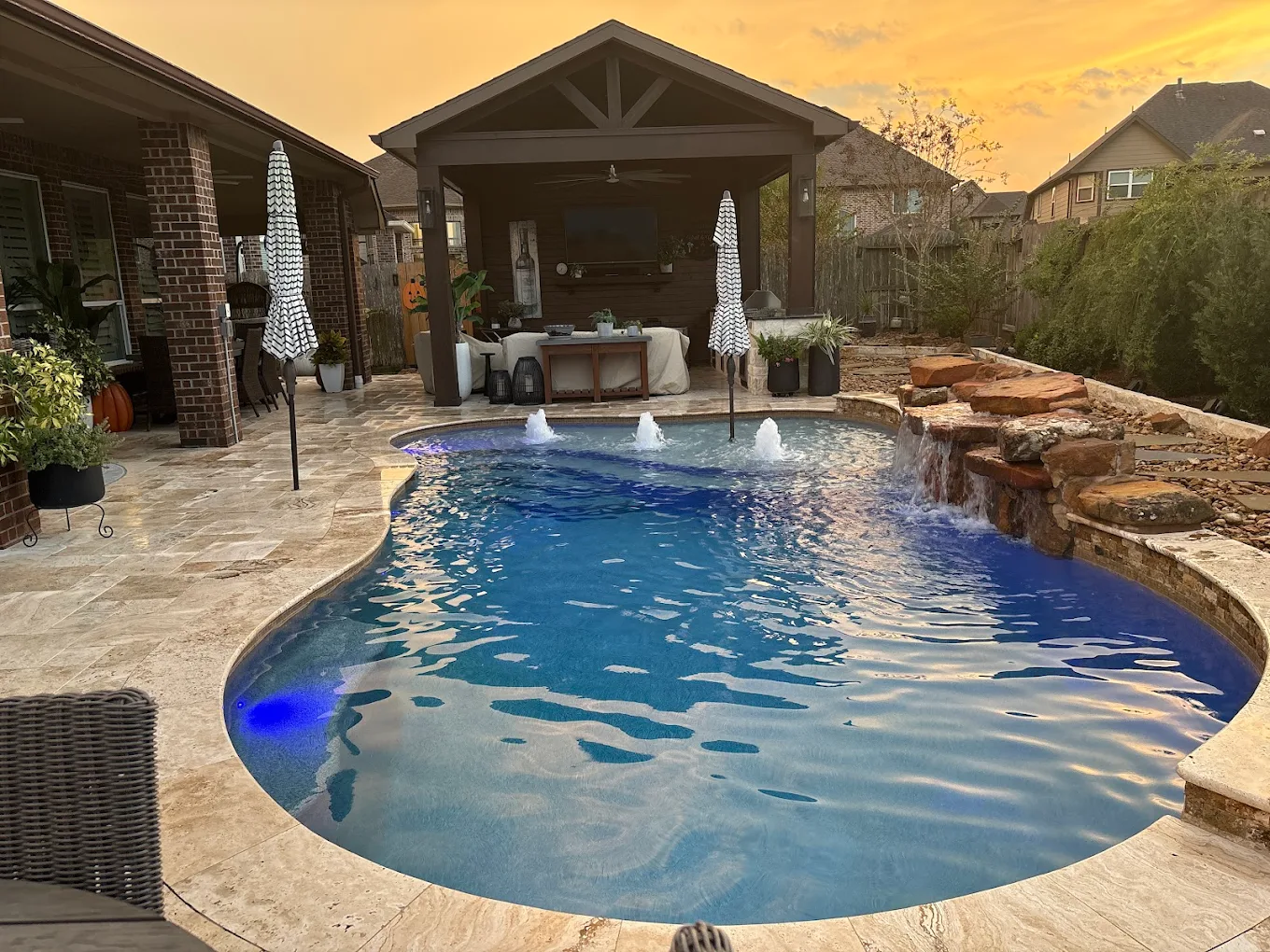
Most in-pool lights sit in a wet niche: a sealed fixture set into a housing in the pool wall, with extra cord coiled behind it. That slack is there on purpose, so the fixture can be lifted up onto the deck for service without draining the pool. The cord runs through conduit to a junction box near the pool and on to the switch, timer, or automation panel at the equipment pad.
Replacing a light is more than swapping a bulb. The fixture comes out of the niche, the old cord is disconnected at the junction box, and the new fixture's cord is pulled through the conduit in its place. When the conduit is packed with debris or the old cord is stuck, that pull is the hardest part of the job. Once the new cord is connected, the fixture is sealed, tested underwater, and screwed back into the niche.
Some older pools have dry-niche lights serviced from behind the wall, or small surface-mount fixtures with no niche at all. We tell you what you have before we quote anything.
Pool lights come in two main voltage families. Many older pools run 120-volt line-voltage lights. Many LED systems run at 12 volts through a transformer made for pool use. A new fixture has to match the circuit it goes on, or the circuit has to be changed to match the fixture, so the voltage question comes first.
The National Electrical Code's pool article (Article 680) treats the two differently, and Texas cities adopt it in different editions, so local rules can vary. Under it, underwater lights that run above the low-voltage contact limit, which includes 120-volt fixtures, must be on a GFCI-protected circuit, and transformers for low-voltage pool lights must be listed for pool and spa use. Metal parts around the pool, including metal niches, are tied together with a solid copper bonding wire so there is no voltage difference between them.
If we open a light and find no working GFCI, a cracked or flooded junction box, or a missing bond wire, you hear about it before the new light goes in. When the fix belongs at your home's electrical panel, that is a job for an electrician, and we will say so plainly.
LED fixtures draw a fraction of the power of the incandescent and halogen lights many older pools were built with, run cooler, and last far longer between replacements. That last point matters more than it sounds. Every time a fixture is opened, its seal is disturbed, and fewer openings mean fewer chances for water to get inside.
Color LEDs add solid colors and preset light shows. Many of them change modes when the power is switched off and back on in a quick sequence, which is fiddly by hand and easy for a timer or a pool automation system. With more than one light, matching fixtures can usually be set to change together so the pool and spa stay in sync.
A bright white LED is still a great choice if you mainly want the pool lit for night swims and safe footing. We help you pick based on how you use the pool, not on the flashiest box.
Gulf Coast weather is hard on pool lighting. Summer thunderstorms bring lightning and power surges that can take out a transformer or an LED driver. Heavy rain can flood a low junction box. If your equipment pad or light junction box was underwater after a storm, leave the lights off until the circuit is checked, and see our pool storm cleanup page for what else to look at.
Hard water leaves a chalky film of scale on lenses, and a light that seems dim is sometimes just crusted over. Cleaning the lens is worth trying before you replace anything. Also, do not run a pool light while the water level is below it. Many fixtures, especially older incandescent and halogen ones, depend on the surrounding water to stay cool and can overheat or crack a lens when run dry.
We test the switch, GFCI, transformer, and power at the junction box, and confirm the voltage, so the new light is matched to the wiring you actually have.
The fixture comes up to the deck on its cord. We look at the seal, cord, niche, and conduit, and tell you plainly whether a repair is worth it or a new fixture makes more sense.
The new fixture and cord go in, the connections are made at the junction box, and the light is tested underwater before it is mounted back in the niche.
We set colors and schedules, show you how to change modes, and note the work so it is easy to trace if anything changes later.
One controller for your pump, heater, lights, valves, and salt cell, on schedules you can change from your phone.
Learn more 02Diagnosis-first repair for pumps, filters, heaters, valves, plumbing leaks, and circulation problems on Houston-area pools.
Learn more 03Resurfacing, waterline tile, coping, decking, water features, and equipment upgrades that bring an existing pool back to life.
Learn moreSend the pool address and what is going on. Lanterra will follow up directly.