
Tell us what you have
Let us know if your spa is attached to the pool or freestanding, and what you are seeing: cloudy water, no heat, weak jets, or something else.
Lanterra Pools cleans, balances, and repairs spas and hot tubs across Sugar Land and the west Houston area, whether yours spills over into the pool or sits on its own on the patio. Hot water packs a lot of use into a small volume, so a spa needs tighter chemistry and closer attention than the pool beside it. We handle the routine care and the repair calls: heaters that will not fire, jets that went weak, and water that turns cloudy a day after you soak.
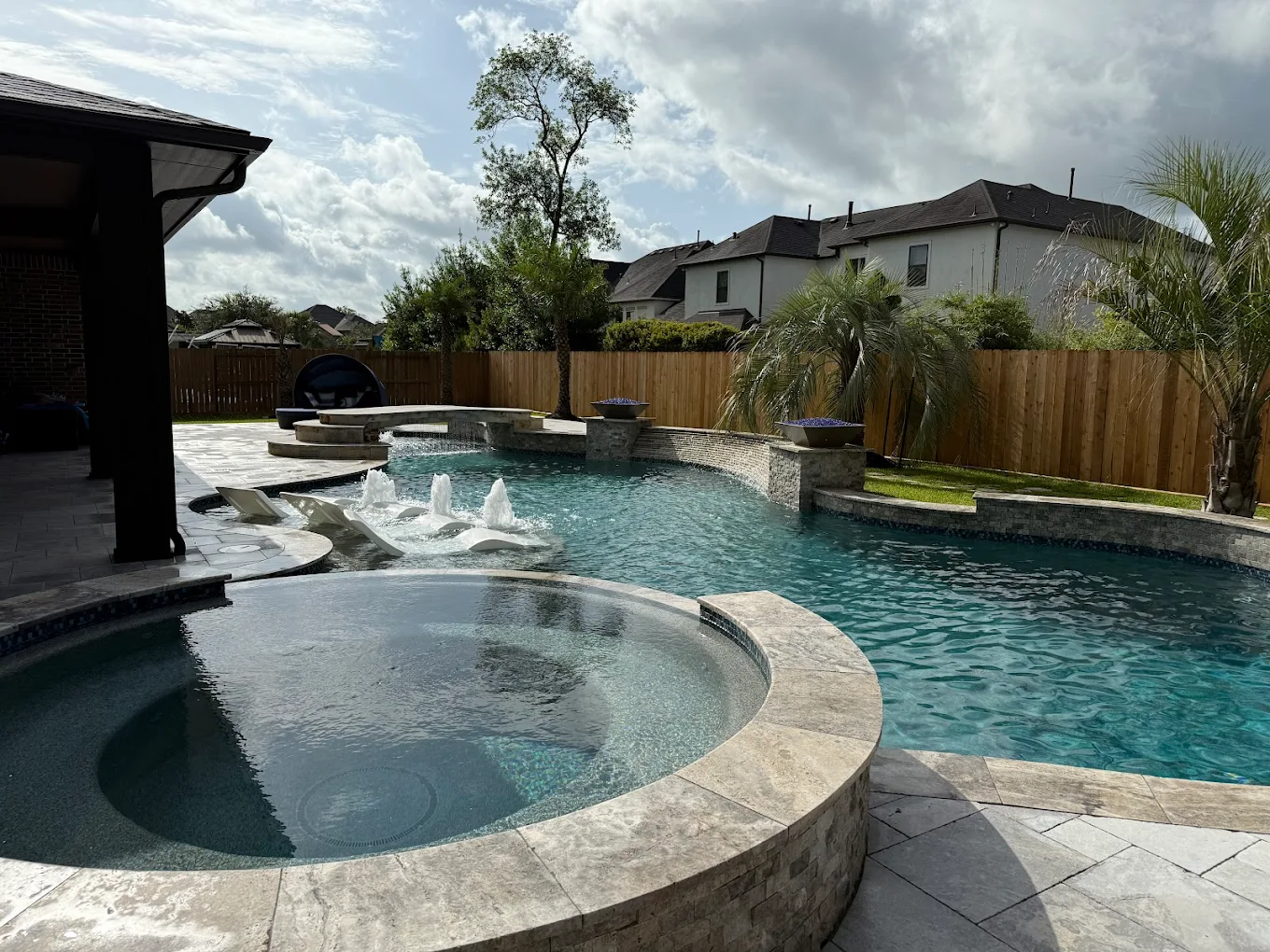
An attached spa, the kind built into the pool with a spillover edge, shares the pool's water, pump, filter, heater, and sanitizer. When you switch to spa mode, valves redirect suction and return flow so the heater only has to warm the spa. Its chemistry is the pool's chemistry, so a problem in the spa usually traces back to a valve, the heater, or the pool water itself.
A standalone hot tub is its own small system with its own pump, heater, filter, and water, and it needs its own testing and treatment plan. The CDC recommends at least 3 ppm free chlorine in a hot tub, compared with at least 1 ppm in a pool, and advises against stabilizer (cyanuric acid) or stabilized chlorine in hot tubs, because it builds up fast in a small body of water and slows the chlorine down.
Warm water speeds up everything you do not want. Sanitizer gets used up faster, and every soak leaves body oil, sweat, lotion, and cosmetics in a few hundred gallons instead of tens of thousands. That is why a hot tub can look fine on Friday and be cloudy or foamy by Sunday.
Small water also swings fast. CDC guidance for public hot tubs calls for testing sanitizer and pH at least twice a day, and more often under heavy use. At home, a quick test before each soak is a sensible habit. Over time, dissolved material builds up to the point where adding more chemicals stops helping, and the fix becomes a drain, a cleaning of the shell and filter, and a fresh fill.
Each spa visit starts with a test of sanitizer, pH, alkalinity, and calcium, because those numbers tell us whether the problem is chemistry, circulation, or equipment. Then we scrub the oil ring at the waterline, vacuum the floor, and clean the cartridge on a standalone tub or check the pool filter pressure on an attached spa.
On a spillover spa we look at the spill edge and tile for calcium scale, which builds where water splashes and evaporates. If it is heavy, pool tile cleaning takes it off without scratching the tile. If you already have weekly pool service, ask about adding spa care to the visit so both bodies of water stay on one plan.
A spa heater that will not fire often has a flow problem behind it: a dirty filter, a clogged basket, or a valve in the wrong position. We rule those out before opening the heater. When the heater itself has failed, pool heater repair covers gas heaters and heat pumps and tells you plainly whether the unit is worth fixing.
Weak or surging jets usually mean low water, air in the line, a clogged impeller, or an air control left closed. A spa that will not switch modes, a pool stuck in spa mode, or a spa that slowly drains down into the pool while it runs often points to a valve actuator that is not turning all the way, or a setting in your pool automation. We find the cause first, then quote the repair.
Houston averages about ten nights a year at or below freezing, based on Bush Intercontinental Airport normals. Above-ground spa plumbing and standalone tubs are the most exposed parts of a backyard on those nights. Before a cold snap, make sure the pump is set to keep water moving and that a standalone tub stays full and running rather than drained. Our freeze protection guide walks through the rest.
The rest of the year, oak catkins and leaves pile up in a small spa quickly, and hard tap water in parts of Fort Bend and Harris County leaves scale on spill edges and jet faces. Fill water varies by address, so we test after every refill instead of assuming the new water starts balanced.
Let us know if your spa is attached to the pool or freestanding, and what you are seeing: cloudy water, no heat, weak jets, or something else.
We test the water, check flow, valves, and the filter, and look at the heater and jets before deciding anything.
Routine issues get handled on the visit. If a part has failed, you get a plain explanation and a quote before we replace anything.
A spa stays clear when it is checked often. We can set up regular visits, alone or alongside your pool service.
Repair for gas pool heaters and heat pumps that will not fire, short cycle, soot up, or stop heating when the weather cools.
Learn more 02Same technician, same day each week: a full clean, water balanced for Houston heat and rain, and an equipment check with notes.
Learn more 03Diagnosis-first repair for pumps, filters, heaters, valves, plumbing leaks, and circulation problems on Houston-area pools.
Learn moreSend the pool address and what is going on. Lanterra will follow up directly.