
Make it safe
We look at the equipment pad first: standing water, damaged wiring, tripped breakers, and anything that should not be powered on yet.
After a hurricane, tropical storm, or hard thunderstorm, Lanterra Pools gets your pool back in order: we pull the debris, check the equipment pad before anything gets switched back on, clean out the filter, and rebalance water that the storm diluted and contaminated. The goal is to get circulation running safely before the pool has time to turn green.
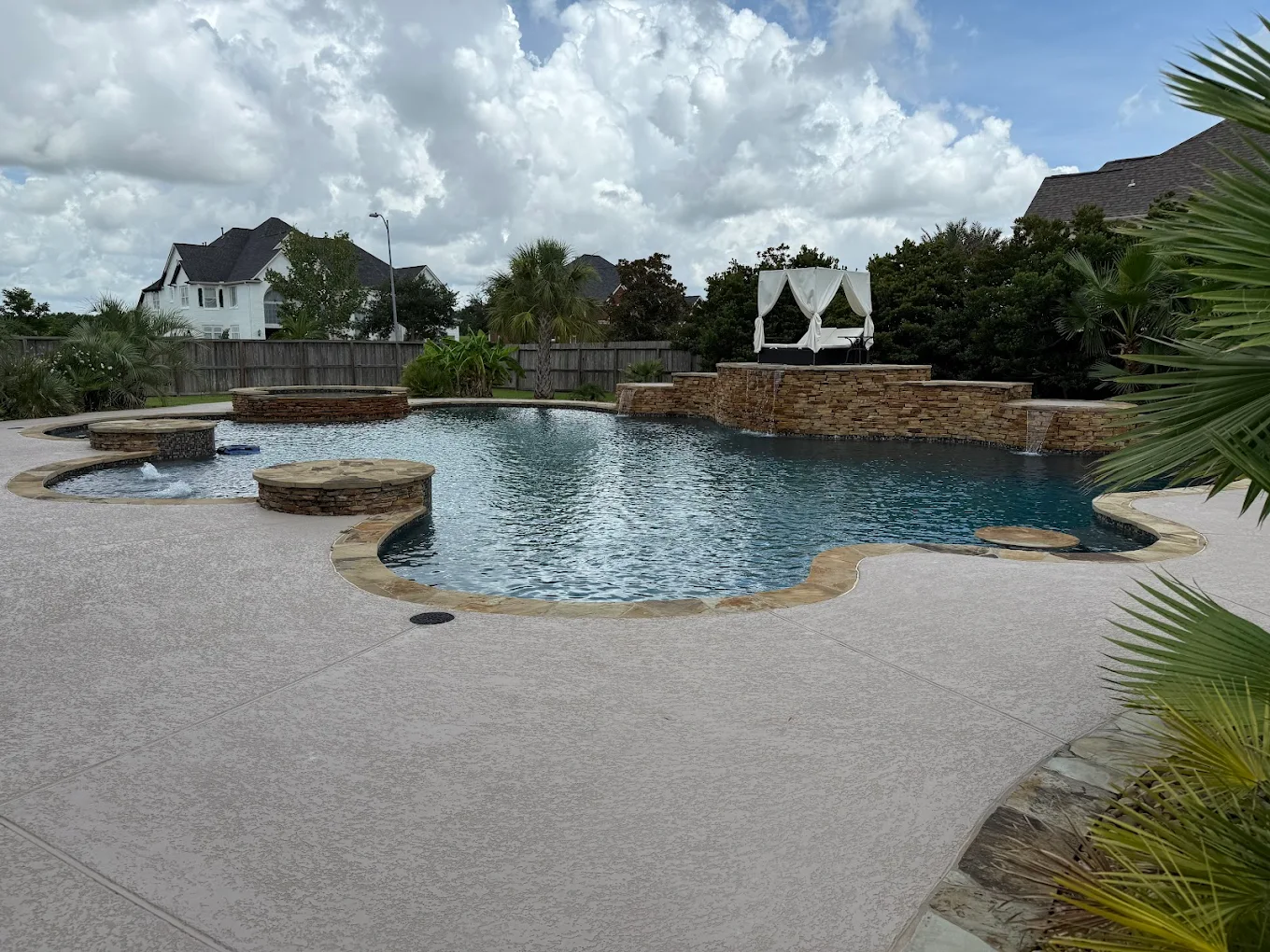
Atlantic hurricane season runs from June 1 to November 30, with the busiest stretch from mid August to mid October. But Houston pools take storm damage all year. June is the wettest month on average at Bush Intercontinental, spring squall lines drop limbs and shingles into backyards, and in 2024 the Houston area saw both a May derecho and Hurricane Beryl in July knock out power for days. A pool that sits without circulation in summer heat can start to turn within a few days, so the cleanup clock starts as soon as the wind stops.
Your pump, filter, heater, salt cell, and the controls for your lights and automation usually sit together on one equipment pad, close to the ground and often in a low corner of the yard. If that pad was under water, do not touch the equipment or flip breakers while standing in water. Turn off power at the main panel only if you can do it from a dry spot. Motors, heaters, and control boards that were submerged need to be dried and checked before they run again, and anything with damaged wiring or a tripped GFCI that will not reset belongs to a qualified electrician.
Once the pad is dry and safe, we inspect each piece, clean the baskets, and restart the system one component at a time. If something was damaged, we diagnose it through our pump repair and equipment repair services and tell you plainly whether it is worth fixing.
Emptying a pool full of muddy water feels like the fast fix. It is the one thing to avoid. After heavy rain the ground around the pool is saturated, and the water in the pool is part of what holds the shell in place against that groundwater pressure. An empty pool in wet soil can crack or even shift. If the water level is above the skimmer, we lower it back to the normal line and stop there.
Draining before a storm is a mistake for the same reason: the rain that follows saturates the ground around an empty shell. Better preparation is leaving the water in, moving chairs, umbrellas, and toys off the deck so the wind cannot throw them into the pool, and planning to pump the level back down once the rain stops.
Several inches of rain dilute everything in the pool at once: chlorine, stabilizer, alkalinity, and salt. Salt systems often show a low salt warning after a big storm because the reading really did drop. Runoff can wash in soil, mulch, fertilizer, and lawn chemicals, and floodwater can carry sewage. All of that consumes chlorine and feeds algae.
We retest the full set of numbers after the debris is out, shock the pool to the level the water needs, and rebalance in the right order. If algae has already taken hold, the job shifts to a full green pool cleanup. If your filter is packed with silt, a deep filter cleaning is usually the next step.
We look at the equipment pad first: standing water, damaged wiring, tripped breakers, and anything that should not be powered on yet.
We net out leaves and limbs, empty the baskets, and vacuum silt so the pump does not choke on storm debris at restart.
With baskets clear, we bring the system back one piece at a time, checking for leaks, prime, pressure, and error codes.
We retest everything the rain diluted, shock to kill what the runoff brought in, and rebalance so the pool stays clear.
Algae removal for green, cloudy, or swampy pools: we kill the bloom, clean up the filter, fix the chemistry, and keep it clear.
Learn more 02Diagnosis-first repair for pumps, filters, heaters, valves, plumbing leaks, and circulation problems on Houston-area pools.
Learn more 03Cartridge cleaning, DE grid cleaning and recharge, and sand filter backwashing, timed by pressure instead of guesswork.
Learn moreSend the pool address and what is going on. Lanterra will follow up directly.