
Walk the facility
We look at the pool, spa, equipment room, drain covers, and your recent logs, and ask how the pool is used in peak season.
Lanterra Pools maintains HOA, community, apartment, and commercial pools across Sugar Land, Fort Bend County, and west Houston on a steady weekly route. Shared pools carry more swimmers, more rules, and more people who notice when something is off. We keep the water clean, record what we find on every visit, and tell your board or property manager what is going on in plain language.
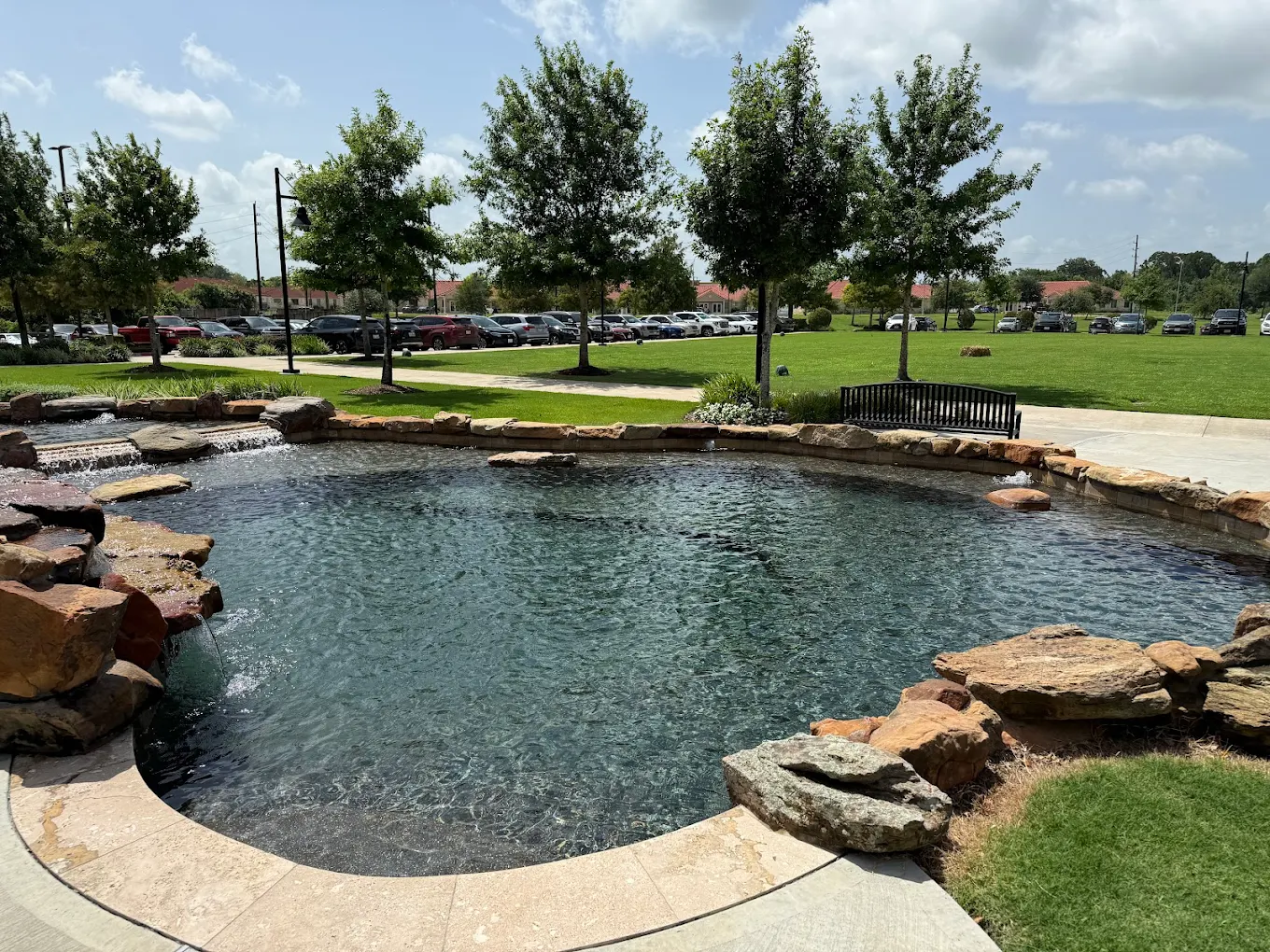
Texas sets the standards for public and semi-public pools in 25 TAC Chapter 265, Subchapter L. An HOA, apartment, or condo pool that is limited to occupants or members and their guests falls under those rules as a Class C pool, even though the general public cannot walk in.
The water limits are specific: free chlorine between 1.0 and 8.0 ppm, pH between 7.0 and 7.8, combined chlorine no higher than 0.4 ppm, and cyanuric acid at 100 ppm or less in an outdoor pool. The water must be clear enough that an 8 inch black disk at the deepest point can be seen immediately. The pool must also be maintained under the supervision of a trained operator who holds a state-recognized pool operator credential.
Since December 19, 2008, the federal Virginia Graeme Baker Pool and Spa Safety Act has required public pools and spas to have anti-entrapment drain covers that meet the federal standard. A pool with a single blockable main drain, or drains closer than 3 feet apart on the same plane, also needs a secondary anti-entrapment device or system.
Drain covers sit in plain view on a weekly visit. If we see one that is cracked, loose, missing a screw, or faded and brittle from sun and chlorine, it goes in the visit notes and we flag it to your contact directly, because a damaged cover is not something to leave for the next report.
Your pool gets the same technician on the same day each week. Every visit covers skimming, brushing, vacuuming, emptying baskets, testing and balancing the water, and checking the pump, filter, and heater. After each visit you get notes on what we did and what we saw, so your board or manager builds a running record of the pool.
Weekly service does not replace the daily testing the state requires for a Class C pool. Whoever handles that on site keeps the daily log. Our weekly readings sit beside it as an independent check, and when the two disagree, that gap is usually the first sign of a problem worth chasing, such as a test kit with expired reagents or a feeder that has stopped dosing.
Volunteer boards turn over and management companies change, so pool knowledge gets lost. We write findings so a new board member without a pool background can follow them, and we send them to one contact you choose, so nobody is guessing who was told.
When equipment fails, we diagnose before we quote and say plainly whether a repair is worth it or whether replacement makes more sense. That gives your board something concrete to vote on. Work on pumps, filters, and heaters runs through our pool equipment repair service.
Normal July and August highs at Bush Intercontinental sit near 95 F, and a community pool on a hot Saturday can see more swimmers in an afternoon than a backyard pool sees in a month. Heat, sunlight, sweat, and sunscreen all pull chlorine down, so a level that held on Tuesday can run short by Saturday evening. Busy holiday weekends are worth planning for ahead of time rather than catching up afterward.
Hurricane season runs June 1 through November 30. After a storm, a shared pool usually needs debris removal, a filter cleaning, and a chemistry reset before it reopens. Our storm cleanup service handles that, and if the water has already turned, green pool cleanup brings it back.
We look at the pool, spa, equipment room, drain covers, and your recent logs, and ask how the pool is used in peak season.
We agree on the service day, who gets visit notes, and who approves repairs, so nothing waits on a missed email.
The same technician cleans, tests, balances, and checks equipment each week, and sends notes after every visit.
We flag aging equipment early so your board can budget for it, and we prepare the pool for summer crowds and storm season.
Same technician, same day each week: a full clean, water balanced for Houston heat and rain, and an equipment check with notes.
Learn more 02Diagnosis-first repair for pumps, filters, heaters, valves, plumbing leaks, and circulation problems on Houston-area pools.
Learn more 03Cartridge cleaning, DE grid cleaning and recharge, and sand filter backwashing, timed by pressure instead of guesswork.
Learn moreSend the pool address and what is going on. Lanterra will follow up directly.